

Moving a Safe: What You Need to Know
Moving a safe, especially a heavy one, can be an intimidating task. Whether you’re relocating your safe due to a move, rearranging your home, or installing a new model, knowing how to move a safe properly is essential for both safety and efficiency. Safes are intentionally designed to be heavy and cumbersome to deter theft, which also makes them very difficult to move without assistance. This guide explains exactly how to move a heavy safe, how to move a safe without a dolly, and even how to tackle the challenging steps of moving a safe up stairs or down stairs. We’ll also discuss the considerations of hiring professional safe movers and understanding how much it costs to move a safe.
Why Moving a Safe Is a Challenging Task
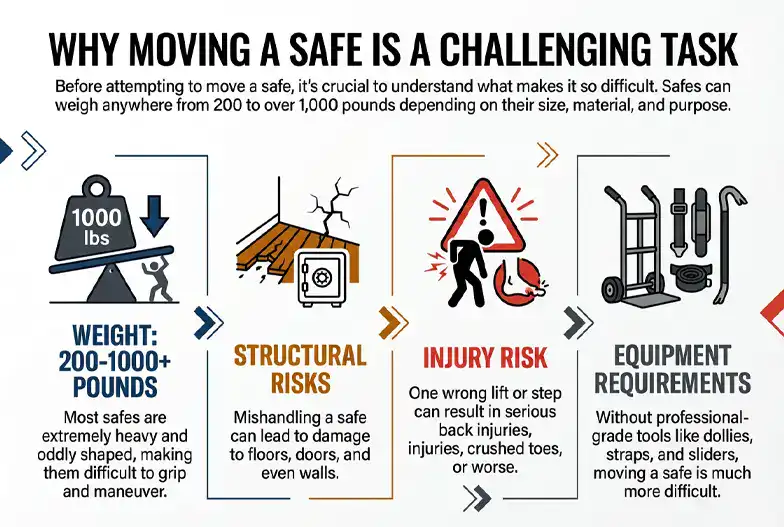
Before attempting to move a safe, it’s crucial to understand what makes it so difficult. Safes can weigh anywhere from 200 to over 1,000 pounds depending on their size, material, and purpose. Here are a few reasons why moving a safe should be approached with caution:
- Weight & Bulk: Most safes are extremely heavy and oddly shaped, making them difficult to grip and maneuver.
- Structural Risks: Mishandling a safe can lead to damage to floors, doors, and even walls.
- Injury Risk: One wrong lift or step can result in serious back injuries, crushed toes, or worse.
- Equipment Requirements: Without professional-grade tools like dollies, straps, and sliders, moving a safe is much more difficult.
How to Move a Heavy Safe Safely and Efficiently
Planning and preparation are the most important steps when learning how to move a heavy safe. Below are some key strategies and steps you should follow to ensure a smooth, injury-free process.
Step 1: Measure and Plan
Make sure to measure the dimensions of the safe, as well as any doorways, hallways, and stairs you’ll have to navigate. Map out the route ahead of time and remove any obstacles along the path. Measuring prevents getting stuck mid-move or damaging property.
Step 2: Empty the Safe
Take out all valuables, paperwork, or items inside the safe to reduce the overall weight and avoid damage to the contents.
Step 3: Use the Right Equipment
- Dollies: A heavy-duty appliance dolly with straps can make a world of difference.
- Moving Blankets: Protect both your safe and your walls/floors during movement.
- Lifting Straps & Gloves: Help manage grip and reduce strain.
Step 4: Load Safely with a Team
Never try to move a safe alone. Enlist at least two to four helpers, depending on the size of the safe. Team coordination is critical to maneuver around tight corners and down steps safely.
How to Move a Safe Without a Dolly
If you don’t have access to a dolly, there are still ways to move a safe, but they require more effort and caution.
- Use Moving Sliders: Place furniture sliders or strong blankets beneath the safe to slide it over hardwood or tile floors.
- Use PVC Pipes: Roll the safe using thick, sturdy PVC pipes placed underneath. As the safe moves forward, keep relocating the pipes from the back to the front.
- Leverage and Caution: Use a pry bar carefully to tilt the safe and insert sliders or pipes.
Remember, these methods are best suited for small to medium-sized safes and are not recommended for stairs or carpeting.
How to Move a Safe Up Stairs
This is one of the most challenging scenarios, and it’s important to proceed with extreme caution.
- Use Stair-Climbing Dollies: Rent or invest in a stair-climbing dolly with automatic tread movement.
- Anchor and Balance: Secure the safe with ratchet straps and maintain balance at all times. An out-of-balance safe can tip and cause injury.
- Move Slowly: Carefully take one step at a time with at least two assistants helping guide and support the safe from both the top and bottom of the stairs.
How to Move a Safe Down Stairs
Going downstairs presents even greater risks due to gravity and momentum. Here’s how to tackle it safely:
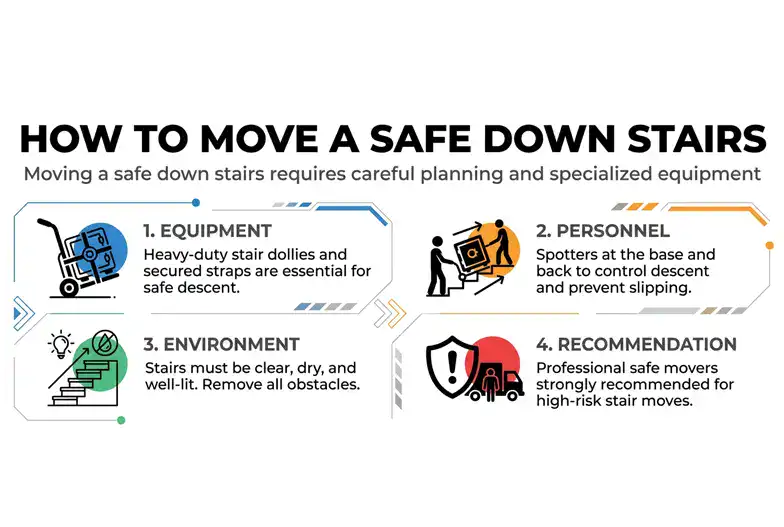
- Use the Right Equipment: Heavy-duty stair dollies are essential. Straps should be tightly secured.
- Have Spotters: Appoint a person at the base and at the back to control the descent and prevent slipping or freefall.
- Check for Obstacles: Make sure stairs are clear, dry, and well-lit. Missteps on wet or cluttered stairs can be dangerous.
Given the high risk, hiring professional safe movers is strongly recommended for stair moves.
How Much Does It Cost to Move a Safe?
Costs can vary depending on several factors:
- Size and Weight: Heavier and larger safes cost more due to increased labor and equipment needs.
- Distance: Local moves may range from $150 to $500, while longer distances or complex scenarios can run $600 or more.
- Staircases or Tight Spaces: These can raise the cost due to additional difficulty and time required.
Brazos Movers offers dedicated safe moving services tailored to your unique needs and budget.
Should You Hire Professional Safe Movers
While it’s possible to move a safe on your own, the risks involved often outweigh the benefits – as it is the same thing with the antique moving. Here are some reasons to consider professional safe movers:
- Expertise: Professionals know how to navigate obstacles safely and efficiently.
- Tools: They have the exact equipment required to handle safes of any size.
- Insurance: Any potential damages are covered under liability insurance.
Additional Resources for Your Move
Looking for more help with your relocation? Check out these great resources:
- How to Move Heavy Furniture – Tips that can also apply to safe moving.
- Piano Moving Services – Similar strategies and challenges apply to pianos.
- The Ultimate Moving Checklist – Don’t forget the paperwork when relocating!
Frequently Asked Questions
Can I move a safe downstairs by myself?
It is not recommended. Safe moves down stairs require multiple people and professional equipment to avoid serious injury or property damage.
What’s the best way to move a safe without damaging my floor?
Use thick blankets, sliders, or padding under a dolly to distribute the weight. Avoid dragging the safe directly on wood or tile floors.
Can I move a 1,000 lb safe by myself?
While technically possible with the right tools and preparation, it is highly risky. Hiring a pro is safer and often more cost-effective in the long run.
Conclusion
Moving a safe isn’t something to take lightly. Whether you’re shifting it a few feet or transporting it across town, having a clear plan, the right equipment, and knowledgeable help can make a world of difference. For stairs, tight corners, or massive safes, don’t take the risk- trust Brazos Movers to handle it with care and expertise. Remember, your safety and your home’s condition are worth the investment in professional transportation.